

Introduction
Schools today face a challenge that doesn’t go away: shifting student populations. Enrollment numbers rise and fall depending on local housing trends, birth rates, and even district zoning updates. For administrators and planners, this unpredictability makes it hard to maintain the right amount of space—too much wastes money, too little impacts education.
Over the years, modular classrooms have become a go-to strategy for dealing with this issue. These classrooms give schools the flexibility they need to grow or contract, all without long, expensive construction projects. They offer a smart way to stay responsive and prepared without overspending or causing massive disruption to students and staff.
Understanding Modular Classrooms
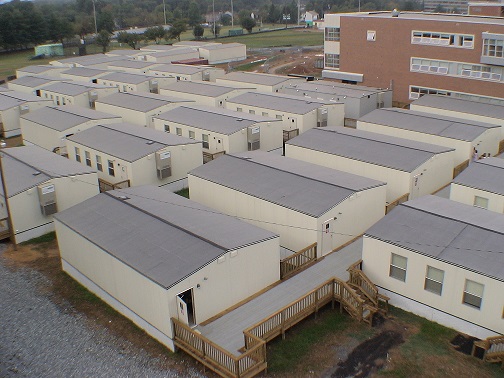
Modular classrooms are prefabricated buildings that are constructed off-site and then assembled on school property. This approach cuts down dramatically on build time and minimizes interference with daily school operations. Once delivered and installed, these classrooms are ready to use with all the core amenities of traditional brick and mortar buildings.
What sets modular classrooms apart from permanent structures?
– Quick setup: Construction happens at a separate site while preparation at the school goes on simultaneously, streamlining the overall process.
– Reconfigurable design: These classrooms can be moved, expanded, or downsized based on need.
– Lower cost: They generally require less expense than traditional construction, especially when factoring in shorter project timelines.
Picture a rapidly growing suburb. One elementary school saw a sudden bump in kindergarten enrollment from a new housing development nearby. Instead of waiting months—possibly years—for permanent classrooms to be funded, approved, and built, the district brought in modular units. Kids had a safe, functional space by the start of the school year, and teachers didn’t have to rotate between rooms or combine classes.
Adapting to Changing Student Populations
This kind of flexibility can be a game-changer for districts facing enrollment shifts. Traditional construction takes a long time and often requires heavy investment with limited room for adjustment if student numbers drop later. Modular classrooms offer an alternative that keeps schools light on their feet.
Some common scenarios where modular classrooms shine:
- A population boom pushes class sizes beyond capacity.
- Schools welcome new specialized programs and need temporary space—like STEM labs or ESL classrooms.
- A natural disaster makes part of a school unusable, and new spaces are needed quickly.
- Enrollments dip, and buildings need to be downsized without losing functionality.
In all these cases, schools can adjust their space almost like playing with building blocks. Modular classrooms can be moved to different parts of campus, temporarily stored off-site, or added as clusters to meet program-specific demands. This is space planning that responds in real time.
Long-Term Benefits for Schools
While the initial appeal of modular classrooms often lies in addressing short-term challenges, there are meaningful long-term benefits as well. These structures are built with durability in mind. High-quality modular buildings often remain in place for decades, serving one use after another as needs change.
From a cost perspective, choosing modular classrooms over permanent additions lets districts manage their capital budgets more effectively. Traditional builds carry significant financial risks and require longer commitments. With modular classrooms, schools avoid high upfront costs and can stagger investments based on actual use. This approach allows for greater financial flexibility over time.
There’s also the practical advantage of being non-disruptive. Since work is done off-site, there’s much less noise, fewer safety concerns, and far less site clutter around staff and students. Class can continue without jackhammers outside or construction vehicles in the parking lot.
Over time, modular classrooms don’t just solve one issue—they become part of a school’s planning strategy. A former general education space can easily be converted into a music room or tutoring hub. Staff offices, parent resource centers, or tech hubs are all possibilities depending on needs.
Designing Classrooms That Support Learning
Today’s modular buildings aren’t just trailers dropped off on campus. They come in a variety of finishes, layouts, and configurations, letting schools create learning spaces that actually inspire and support students.
Some features that schools can request include:
– Open layouts with flexible furniture options
– Built-in storage for supplies, student belongings, or manipulatives
– Upgraded HVAC systems and insulation for quiet, climate-controlled comfort
– Efficient lighting, natural daylighting with large windows, and eco-friendly materials
– Full tech readouts with smartboards, charging bays, and audio setups
Design upgrades can have a real impact. One school designed a modular unit as a science classroom with sinks, prep counters, and equipment storage. This not only enhanced hands-on learning but also cleared up bottlenecks in other parts of the building. Teachers had what they needed in one spot, and kids got more out of each class period.
When students and staff feel comfortable and supported, the entire educational environment improves. It’s about more than just walls and a ceiling—it’s about creating the right conditions for focus, collaboration, and effective teaching.
Preparing For What’s Ahead
Education is changing. School districts are rebuilding after the pandemic, balancing new instructional models, and responding to shifting community needs. Planning for stable enrollment has become more challenging, and schools need space solutions that work on their schedules and budgets.
Modular classrooms meet these needs with an approach that balances stability and adaptability. They’re one of the few building solutions that can expand or shrink in sync with real demand, without locking schools into decade-long construction commitments.
For districts thinking long term, modular classrooms offer more than a temporary fix. They represent a strategy—a way to stay ready for whatever comes next while keeping the focus on students.
A well-placed modular building makes room where and when it’s needed, easing stress on classroom sizes and budgets. Schools that invest in this kind of flexibility today are better positioned to handle the surprises that come tomorrow.
To stay ready for shifts in enrollment without sacrificing learning space or budget, explore how modular classrooms for schools can solve space challenges both now and down the road. US Modular Group East, Inc. offers smart solutions built to move with your school’s needs.